

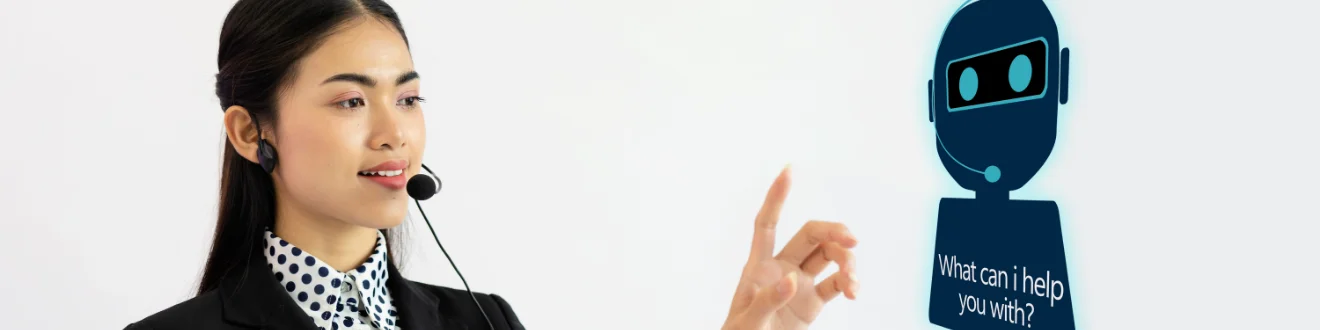
Technology is evolving rapidly, and the customer service sector is no exception. The role Customer Service Representative The world is currently undergoing a major transformation thanks to the adoption of artificial intelligence (AI) technology. AI technology offers numerous benefits, enabling customer service professionals to work more efficiently and provide better service to customers. However, as with any innovation, there are challenges to be overcome in adapting this technology.
In this article, KPSG akan membahas bagaimana layanan pelanggan pada bisnis beradaptasi dengan teknologi AI dan bagaimana teknologi ini meningkatkan kualitas layanan pelanggan.
What is a Customer Service Representative?
Customer Service Representative adalah profesional yang bertanggung jawab untuk membantu pelanggan dengan pertanyaan, keluhan, atau masalah yang mereka hadapi terkait dengan produk atau layanan perusahaan. Customer Service Representative berfungsi sebagai penghubung antara perusahaan dan pelanggan, memastikan bahwa pengalaman pelanggan berjalan lancar, serta menyediakan solusi yang tepat dan efektif. Tugas mereka meliputi menjawab telepon, menangani permintaan email, dan memberikan dukungan melalui berbagai saluran komunikasi lainnya.
As technology advances, the role of customer representatives is increasingly focused on more efficient and personalized service, and AI plays a vital role in this process.
The Importance of AI Technology for Customer Service Representatives
AI technology offers a variety of benefits that can help Customer Service Representatives serve customers more effectively. Let's discuss some of the key advantages of this technology:
Increase speed and efficiency
Dengan bantuan AI, dapat menyelesaikan masalah pelanggan lebih cepat dan efisien. Misalnya, chatbot berbasis AI dapat merespons pertanyaan sederhana secara otomatis tanpa memerlukan keterlibatan manusia. Hal ini mengurangi waktu tunggu pelanggan dan memungkinkan untuk fokus pada masalah yang lebih kompleks.
Providing more personal solutions
AI memungkinkan Customer Service Representative untuk memberikan pengalaman yang lebih personal. Dengan menganalisis data pelanggan, AI dapat membantu untuk memahami preferensi dan riwayat interaksi pelanggan. Ini memungkinkan untuk memberikan solusi yang lebih sesuai dengan kebutuhan pelanggan, meningkatkan kepuasan dan loyalitas mereka.
Reducing human error
One of the biggest challenges in customer service is the potential for human error. AI, particularly through automation, can reduce this risk by automating certain processes. For example, AI can help manage customer data more accurately and consistently, reducing the likelihood of data input errors that can impact the customer experience.
Scalability: Handle multiple customers at once
AI can help customer service representatives handle a higher volume of customer requests without sacrificing service quality. Technologies like chatbots and virtual assistants enable companies to handle multiple customer interactions simultaneously, increasing service capacity without the need for additional staff.
Adapting Customer Service with AI
In order to be able to take advantage of AI technology dengan baik, harus mampu beradaptasi dengan perubahan ini. Adaptasi ini mencakup pengembangan keterampilan baru dan penerapan teknologi yang tepat dalam proses kerja mereka.
Leveraging AI for customer service
Proses adaptasi dimulai dengan pemahaman yang lebih baik tentang teknologi AI itu sendiri. perlu dilatih untuk menggunakan alat-alat AI seperti chatbots atau virtual assistant yang dapat membantu mereka menyelesaikan tugas-tugas tertentu. Ini akan memungkinkan mereka untuk memberikan layanan pelanggan yang lebih cepat dan lebih efisien.
Machine learning integration for continuous learning
Machine learning is a branch of AI that enables systems to learn from data and previous experiences. Customer service representatives can leverage machine learning to improve their ability to solve customer problems. These systems will continue to evolve and become more accurate as they process more data and customer interactions.
Personalize services based on customer data
Dengan kemampuan AI untuk menganalisis data pelanggan, dapat memberikan layanan yang lebih personal. Misalnya, AI dapat memberikan wawasan mengenai riwayat pembelian atau masalah sebelumnya yang dihadapi oleh pelanggan. Dengan informasi ini, dapat menyusun solusi yang lebih tepat sasaran, meningkatkan pengalaman pelanggan secara keseluruhan.
Combine AI with a human touch for a hybrid approach
While AI has many benefits, nothing can completely replace the human touch in customer service. Hybrid approach yang menggabungkan kecanggihan teknologi AI dengan empati dan keterampilan interpersonal seorang merupakan kunci untuk memberikan layanan pelanggan yang optimal. dapat mengatasi masalah yang lebih rumit atau emosional yang mungkin sulit diselesaikan oleh sistem otomatis.
Maintain customer data security and privacy
One of the biggest challenges in implementing AI in customer service is ensuring the security of customer data. Customer service representatives must be trained to understand the importance of maintaining the privacy and security of customer information. Therefore, AI technology must be used in a way that respects and protects customer data, avoiding potential privacy breaches.
Conclusion
AI technology has had a significant impact on the way customer service representatives work. With its ability to increase speed, efficiency, and personalize service, AI helps deliver a better customer experience. However, to successfully adopt this technology, it requires careful adaptation, maintaining a balance between AI and human interaction, which remains crucial for delivering optimal service.
With proper implementation, Customer Service Representatives can optimize the use of AI technology to meet customer needs in a more efficient and secure manner. KPSG ready to help your business integrate AI technology effectively, ensure successful implementation, and create a better customer service experience. Contact us now to start the digital transformation in your company!