
The customer life cycle is a process that describes the stages a customer goes through. This process typically begins when a consumer becomes aware of a product or service, then progresses to becoming a loyal customer.
Every company that wants to grow its business must manage the customer lifecycle. This is necessary to create a better customer experience and thus achieve higher profits.
Before you manage the customer life cycle, it's a good idea to first understand it. We've provided a complete explanation below.
What is meant by Customer Life Cycle?
The customer life cycle is the cycle or process customers go through when they interact with your company. This cycle consists of five main stages:
- Reach
- Acquisition
- Conversion
- Retention
- Loyalty
When a company effectively manages the customer life cycle, it can gain a complete picture of its customers' journey and highlight areas that need improvement. This allows marketing, sales, and service teams to design the best strategies to ensure a pleasant customer experience at every stage. This ultimately increases customer satisfaction, leading to continued loyalty.
See Also: Mastering the Customer’s Expectation Through CX
Understanding Each Stage in the Customer Life Cycle
1. Reach
The first stage in the customer life cycle is reach. At this stage, potential customers will search for a solution in the form of a product or service that can solve their problem. They will conduct research, such as comparing various products or reading customer reviews, to find the product/service that best suits their needs.
Therefore, companies must be able to implement various effective marketing strategies to reach their target market. Some marketing strategies that can be implemented include:
- Search engine optimization
- Inbound marketing
- Content marketing, dll.
2. Acquisition
Once customers are aware of the products/services you offer, they will open the company website or contact the team. customer service You. At this stage, the customer has entered the second stage, namely acquisition.
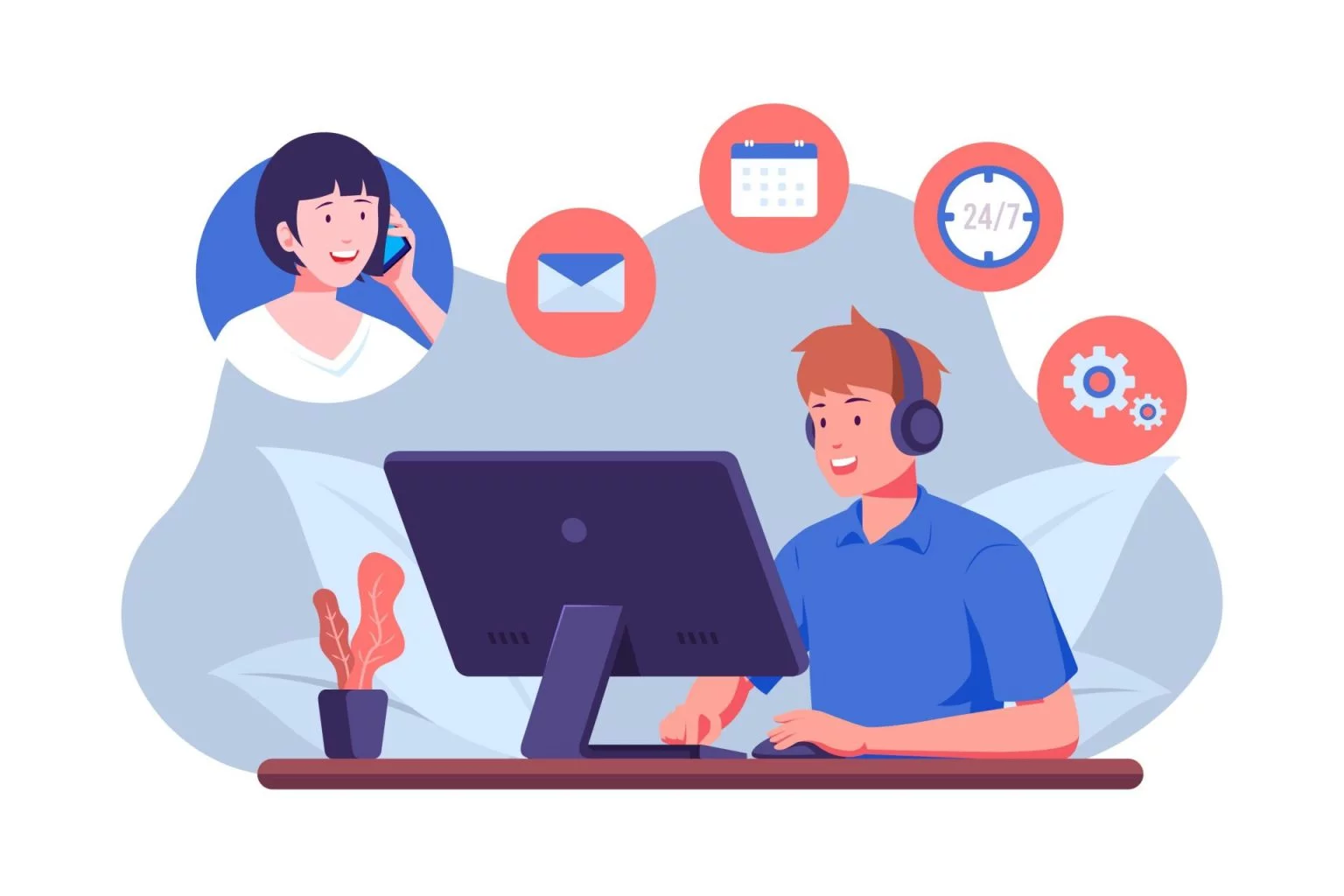
As a company that provides services/products, you must be able to handle customers very well to encourage them to make a purchase. If a customer contacts you by phone, the customer service team must be able to respond to their questions effectively. The customer service team can also inquire more about the customer's needs so they can offer the most appropriate product/service to meet their needs. Therefore, it is crucial for a company to have a professional inbound customer service team capable of providing excellent customer service.
3. Conversion
Once consumers receive an explanation from the marketing/CS team and are convinced that the service/product you're offering is the best, they'll make a purchase. This stage is known as the conversion stage.
Here, companies must ensure that the purchasing process runs smoothly. This is essential to creating a positive customer experience that will keep customers coming back for more.
NahTo provide a smooth purchasing process, companies can take various approaches. Some of these include providing a simple purchasing procedure, offering various payment options, providing clear product and pricing information, and so on.
Additionally, companies can utilize a CRM (Customer Relationship Management) system that can record, report, and analyze various customer data. This valuable data can be used to inform future marketing strategies and enhance the customer experience.
4. Retention
After the first purchase, the customer will move on to the next stage of the customer life cycle: retention. Here, the company's focus is on maintaining ongoing customer relationships. To achieve this, companies need to maintain customer engagement. Some strategies include providing 24/7 inbound customer service, offering product discounts/promotions, soliciting feedback, and maintaining customer interaction through various platforms, including email.
5. Loyalty
The final stage in the customer life cycle is loyalty, where consumers become loyal customers of your company. At this stage, customers will not only purchase your products/services repeatedly but will also promote them to others.
It's important to understand that it takes a lot of time and effort to get a customer to this stage. Therefore, companies must manage their loyal customers as effectively as possible. One example of a strategy you can implement is offering a loyalty program that encourages customers to keep returning to your company.
See Also: What has Changed Forever in the CX World?
Tips for Managing the Customer Life Cycle
In order for customer life cycle management to produce good results, there are several things you can do, as follows.
1. Identify your target market. This will help you provide relevant content to reach that target market.
2. Provide self-service resources where customers can independently find out the information they need about your services/products.
3. Provide proactive customer service to reach your target market.
4. Ensure simple and easy purchasing procedures.
5. Provide assistance options during purchasing decisions, such as by providing an AI chatbot system.
6. Buat pelanggan merasa diperhatikan pasca-pembelian, seperti dengan menggunakan sistem email otomatis yang dapat mengirimkan pesan ucapan terimakasih ketika pelanggan menyelesaikan pembelian.
7. Take advantage comprehensive Customer Experience services from KPSG to simplify the customer life cycle management process more practically!
Best Practices to Improve Customer Experience in Every Customer Life Cycle
If you want your business to continue growing, you need to manage every stage of the customer lifecycle to create a positive customer experience. This way, you can generate more profits.
KPSG menawarkan layanan komprehensif untuk meningkatkan customer experience di perusahaan Anda. Kami memiliki beragam solusi yang dapat Anda pergunakan untuk mengoptimalkan setiap tahapan customer life cycle yang dilalui oleh target market Anda.
Please contact us or click Customer Experience Management Services KPSG for further explanation.